
PDF Team Visits Mufindi to Witness 100% WASH Impact
In September, members of PDF’s Dar es Salaam–based team — including our newly appointed Fundraising and Organizational Development Officer Viivi Hämäläinen and Communications Officer Deborah Munisi — travelled to Mufindi to join our local project staff in reviewing the ongoing impact of the 100% WASH Project, funded by the well:fair Foundation. Together, they spent time with community members, health workers, students, and local leaders, gathering stories that show how access to clean water is improving health, education, livelihoods, and climate resilience.
Before the project, access to safe water in Mufindi District was extremely limited. Families — especially women and children — walked long distances through rough terrain to collect water from unprotected sources like rivers and shallow wells. As Grace Mlomo from Kwatwanga Village recalled, “We used to walk seven kilometers every day just to bring home one bucket of water.” These journeys were physically demanding and often dangerous, with risks of injury and animal attacks. Because the sources were unsafe, illnesses such as diarrhea, typhoid, stomach infections, cholera, and urinary tract infections (UTIs) were common. Schools struggled with frequent absenteeism as students were sent to fetch water; toilets were dirty or blocked; and without handwashing facilities, disease outbreaks spread quickly. For adolescent girls, managing menstruation was especially challenging, leading to missed school days and discomfort.
Today, communities report a visible shift. With the 100% WASH Project, safe and reliable water is now available closer to homes, schools, and health facilities. Health workers have recorded significant reductions in waterborne disease. “We have seen a clear decline in cases of urinary tract infections, diarrhea, and typhoid — especially among school children. In the past these illnesses were very common, but today we treat far fewer cases,” said Chief Medical Officer Andrew Bahati of Ifwagi Health Center. At Ifwagi, severe diarrhea cases among children under five dropped from 22 in 2023 to just two by September 2025. At Nzivi Dispensary, Acting Doctor Faraja Robati noted a decrease from seven to eight student cases per month to just three or four — sometimes none at all.
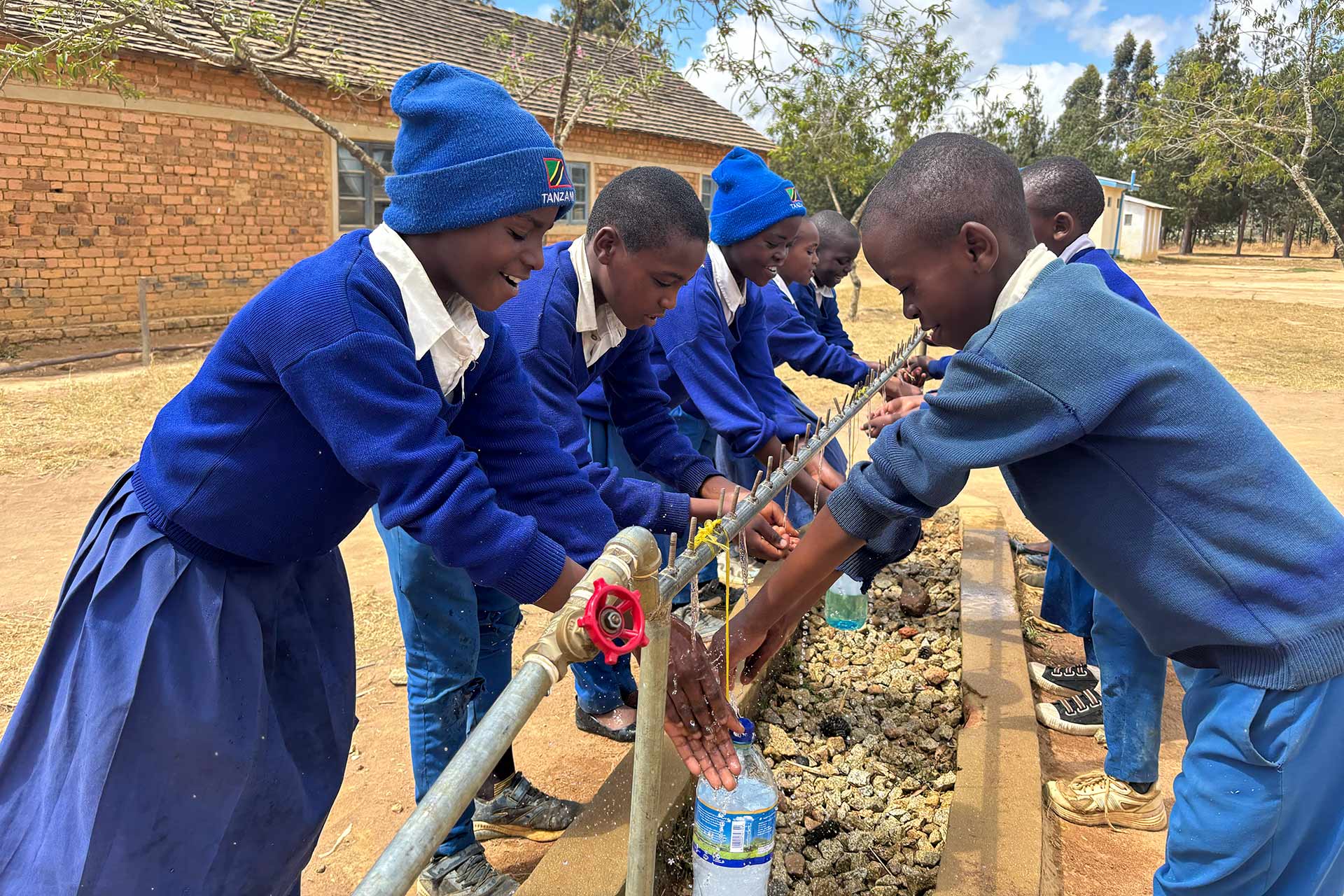
Schools describe similar improvements. Regular handwashing, access to clean toilets, and water for daily use have led to better attendance and increased confidence among students. As students at Mninga Secondary shared: “Today, with clean and safe water always available, we feel courageous and confident. We can wash when needed, manage our periods with dignity and privacy, and focus on our studies.”
At home, families are putting water to productive use. Households are growing vegetables, keeping livestock, and making bricks to support construction. In Kwatwanga, community member Raheli Mkongwa explained: “We grow vegetables to feed our children and sell to our neighbours. The money has improved our family’s life.” Some residents also brew local beverages or support school needs through water-based income.
Water access has even enabled environmental efforts. At Udumka Primary School, the SWASH Club produces between 8,000 and 10,000 tree seedlings each season, selling them to the community and planting them on the school farm — an effort that supports both education and land restoration.
Across Mufindi, clean water is no longer just a basic need — it is becoming a foundation for health, learning, and economic progress. With support from the well:fair Foundation and strong local participation, thousands of families have turned the daily struggle of fetching water into opportunities to build healthier and brighter futures.